Water expands approximately 9% when it freezes. A barrel or diverter fitting left with standing water through a Canadian winter will crack, split, or deform — particularly in high-density polyethylene (HDPE) barrels, which become brittle at temperatures below −20°C. The good news is that winterization takes under an hour once you know the sequence.
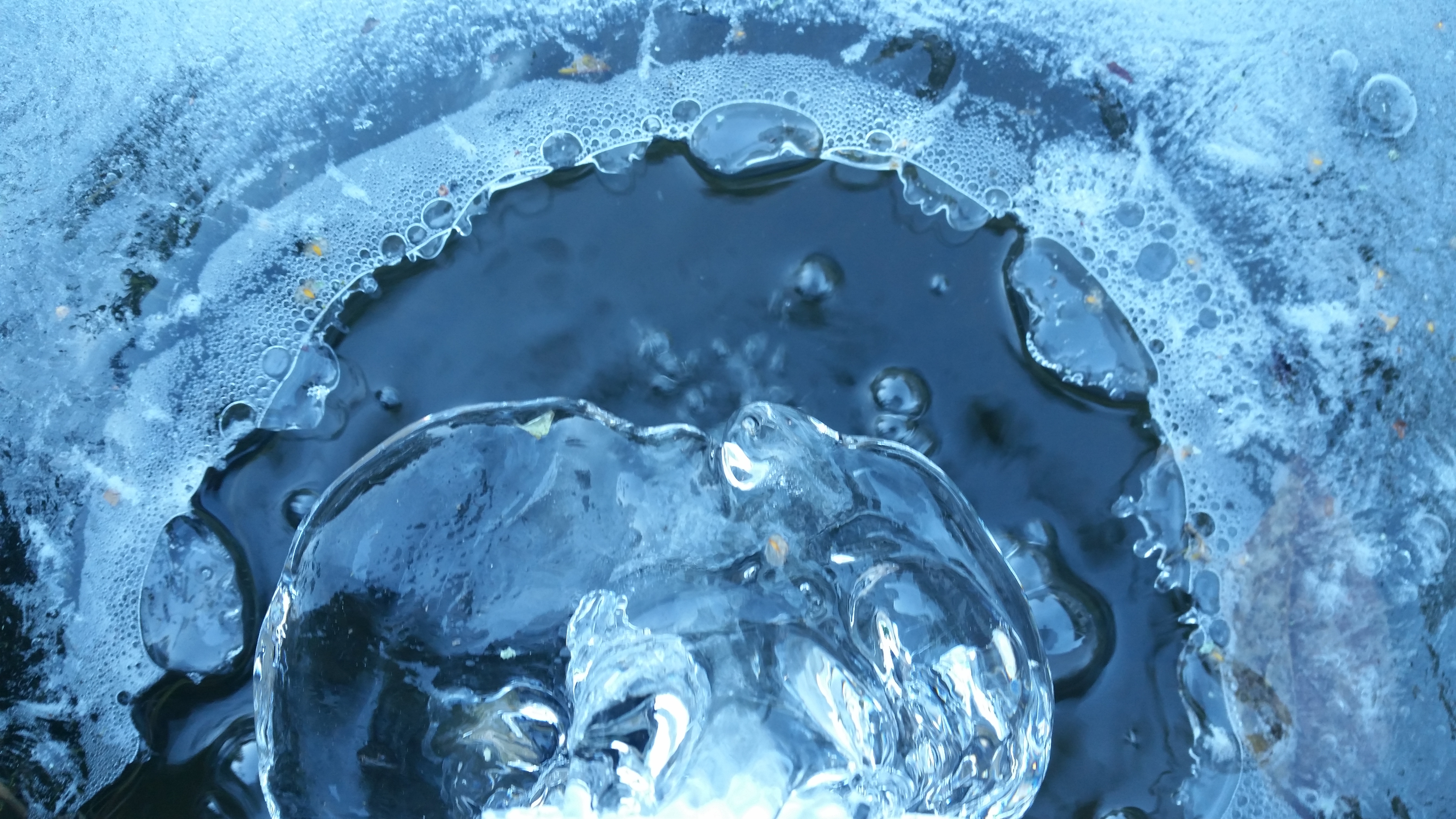
Water freezing as it exits a pipe in cold conditions. Water left in barrel fittings and hoses behaves the same way. Photo: Wikimedia Commons / CC BY-SA.
When to Winterize
The critical threshold is the first forecast overnight low at or below 0°C. In Canadian cities, typical first hard frost dates by region are approximately:
| Region | Approximate First Frost | Last Frost (Spring) |
|---|---|---|
| Southern BC (Metro Vancouver) | Late November | Mid-March |
| Southern Ontario (Toronto) | Mid-October | Late April |
| Ottawa / Eastern Ontario | Early October | Early May |
| Calgary, AB | Late September | Mid-May |
| Winnipeg, MB | Late September | Mid-May |
| Atlantic Canada (Halifax) | Late October | Late April |
These are approximate averages — individual year variation is significant. Check the 14-day forecast from Environment Canada (weather.gc.ca) rather than relying on calendar dates. Initiate winterization at least one week before forecast frost to leave time for residual water in the hose to drain.
A single overnight frost is enough to crack a partially-full barrel if the temperature drops to −5°C or below. Do not delay until a "hard" freeze warning.
Winterization Checklist
- Use remaining water. Water the garden, fill buckets for indoor plant use, or use the tap to discharge the remainder into a planted area. Avoid draining barrel water directly onto pavement or near the foundation.
- Open the tap fully. Open the barrel's tap or spigot to release remaining water and leave it open during storage to prevent any residual pooling.
- Disconnect the inlet hose. Detach the flexible hose from both the diverter outlet and the barrel inlet. Hold each end up to drain residual water. Let the hose dry for a day before coiling and storing.
- Remove the diverter insert. Slide the insert-style diverter out of the downspout cut. Store the diverter indoors — UV exposure and freeze-thaw cycles degrade the plastic over time. Leaving it installed through winter risks cracking if water enters the fitting.
- Reconnect the downspout. The cut made for the diverter must be bridged for winter. Most diverter kits include a bypass plate or section of downspout material for this purpose. If not, tape the cut closed with self-sealing butyl tape or replace the cut section with a length of matching downspout material. Verify that water flows freely down the original downspout path before the first fall rain.
- Invert or store the barrel. The most reliable approach is to bring the barrel indoors (garage or shed) for winter. If that is not possible, tip it upside down (lid off) on a surface that allows drainage. Never leave a barrel upright with any water inside it. Do not leave the lid sealed on an inverted barrel — condensation inside a sealed upright barrel can cause cracking.
- Check fittings and seals. Inspect the tap fitting, overflow port, and inlet bung for cracks or deformed gaskets. Replace worn rubber washers before reinstallation in spring — they are inexpensive and prevent the leaks that typically appear after a first-season winter.
Storage Options
- Indoor storage (preferred): A garage, basement, or shed protects the barrel from UV degradation and physical damage. A 200 L barrel is typically 100–110 cm tall and 60 cm in diameter — check clearance before assuming it fits through a standard door.
- Outdoor, inverted: Acceptable in climates where winter lows do not drop below −20°C regularly and the barrel is HDPE rated for low temperatures. Check the manufacturer's temperature rating.
- IBC totes: These are too large to store indoors in most residential settings. Drain fully, remove the lid, and leave the valve open. The steel cage provides some structural support against ice pressure, but water must still be fully drained.
Spring Reinstallation
Reinstall after the last hard frost forecast — typically May in most of Ontario and the Prairies, April in Metro Vancouver and Atlantic Canada. The sequence reverses winterization: fit the diverter, attach the inlet hose with the correct slope, confirm the overflow routing is intact and unobstructed, and run a test with a garden hose before the first rain event.
Inspect the mosquito screen on the barrel inlet and the overflow outlet cover at this point. Screens can become blocked with debris or damaged by winter conditions.